Coast and towers in Maratea
Coast of Maratea. From Acquafredda to Castrocucco
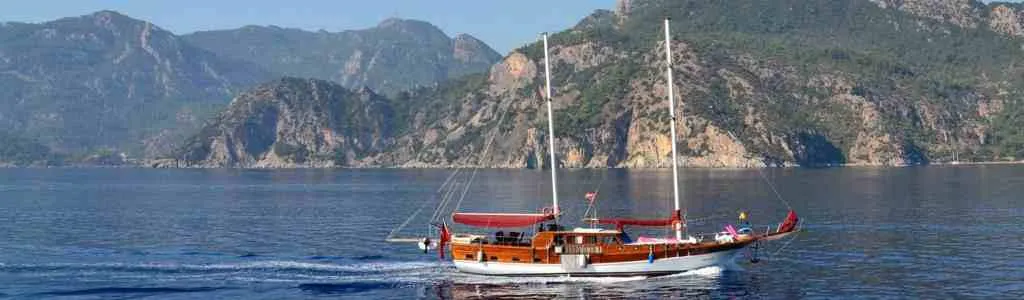
The whole coast, from tower to tower, North Coast
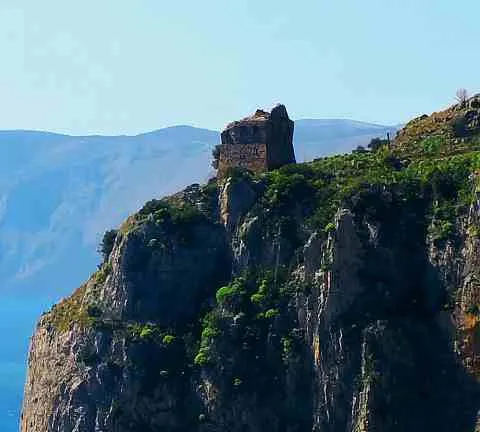
Maratea coast is bordered by various signaling towers, all built in the late sixteenth century to protect the pirate raids; from North to South we are:
Torre of Crivi, the height of the Midnight Channel [see photo], quadrangular, ruin;
Torre of Acquafredda, almost to the extreme south of the town of Acquafredda, quadrangular, ruin;
Torre Apprezzami the donkey, to the south of Cersuta, on a spur overlooking to the sea, with a square plan, ruin;
Torre Santavenere, originally quadrangular, was renovated in the 50's and 60's, and appears to be the largest of all the coastal towers of Maratea; the height of the Santavenere Tower, is a buoy with top mark to X, which signals the end of a subsea pipeline: from this point is very visible the historic center of Maratea and the high of the Redeemer Statue 22 m located on Monte San Biagio ( 630 m).
The statue is the most visible element of the area, along the arc of the horizon even at night: in fact, in the summer months the statue is illuminated.
Tower of Santa Venere
The Tower of Santa Venere, completed in 1596, was a "Capitana" or "Imperial" Tower—a strategic structure that housed a small garrison of soldiers and served as a reference point for all other coastal towers in the area. Unlike the standard coastal towers, typically built with three or five machicolations, a panoramic terrace, and a cannon embrasure facing the sea, this tower stood out for its original design conceived by royal engineer Pietro Castiglione.
At the end of the 17th century, the renowned traveler Giovan Battista Pacichelli described it as "the most beautiful tower in the Kingdom of Naples," praising its elegance and strategic importance.
In the mid-20th century, its original form underwent significant changes. In the 1950s, architect Stefano Berardi transformed the tower for private residential use, altering its historical and architectural integrity. Despite these modifications, the Tower of Santa Venere remains a valuable testament to the coastal defense system of the Kingdom of Naples.
South Coast
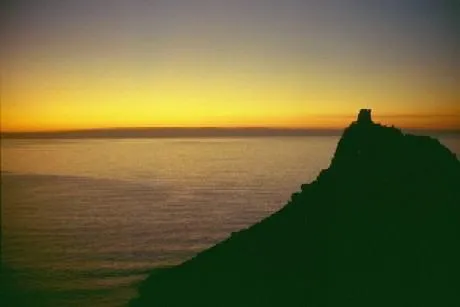
Tower Filocaio, south of Porto, also renovated, a square; southernmost islet S. Ianni comes detached from the coast and low over the water, (max 8m).
The summit is marked by a cross and the island is almost completely covered with vegetation.
Coming from the North, in the passage between the island and the coast, you should be very careful to the rocks and shoals along the coast, and especially to the dry of Giumenta [mare] which is right on the extension of the median parallel route to the coast.
The upper part of the dry has a quota of 1 m, but both to shore off, the transition is smooth.
Later we find Caina Tower [see photo], on a small promontory halfway between Marina di Maratea and Castrocucco, a square, ruin.
A Castrocucco are present, on the homonymous mountain, the ruins of the castle, probably of medieval origin with modifications and alterations dating back to the '600 and today completely ruined.
The coastal tower defense system of Maratea
The coastal tower defense system of the Kingdom of Naples was part of a broad and organized network designed to protect the territory from enemy incursions, particularly those of the Barbary pirates, who posed a constant threat in the 16th and 17th centuries. The towers, scattered along the kingdom's coasts, were not isolated structures but components of an integrated system that included major fortresses, secondary outposts, and an efficient signaling network.
Structure of the Defense System
The coastal towers served as watchpoints, communication hubs, and active defense sites. Each tower was manned by permanent personnel who ensured continuous coastal surveillance. Two sentinels patrolled each guard post, alternating in 24-hour shifts to maintain a constant and vigilant presence. This system required a deployment of a lot of men, distributed along the coast according to the number of towers and outposts in each locality.
Distribution of the Towers
The number of towers varied greatly from one area to another, depending on the territory's vulnerability and strategic importance. Some towns or cities had just one tower, while others, such as Maratea, had many more. This density reflected the need to protect settlements, trade routes, and natural resources effectively.
Economic Organization
The tower guards received a daily wage of one carlino for each pair of sentinels. This modest but steady payment ensured a basic level of subsistence for the soldiers on duty. This expense, covered by the kingdom’s treasury or local contributions, was an investment in collective security.
Functioning of the Towers
Each tower was designed to serve multiple purposes:
- Signaling: Through a system of fires or smoke signals, the towers could quickly alert other towers and nearby towns of impending dangers.
- Surveillance: From their elevated positions, the towers provided a clear view of the surrounding waters, allowing for early detection of hostile ships.
- Active Defense: Some towers were equipped with weapons, such as cannons or bombards, to repel potential attacks.
Strategic Importance
This system demonstrated an advanced level of military and civil planning, integrating defense, communication, and economic organization. Although the guards’ pay and living conditions were modest, their role was crucial for the security and stability of the Kingdom of Naples.
The coastal tower system is now a testament to the ingenuity and ability to adapt to the challenges of its time, leaving behind a valuable architectural and historical legacy.
CACCIA AL TESORO
Un nuovo e divertente modo di esplorare la città
UN' AVVINCENTE CACCIA AL TESORO
che unisce nel divertimento tutta la famiglia