
Coast and towers in Maratea
Coast of Maratea. From Acquafredda to Castrocucco
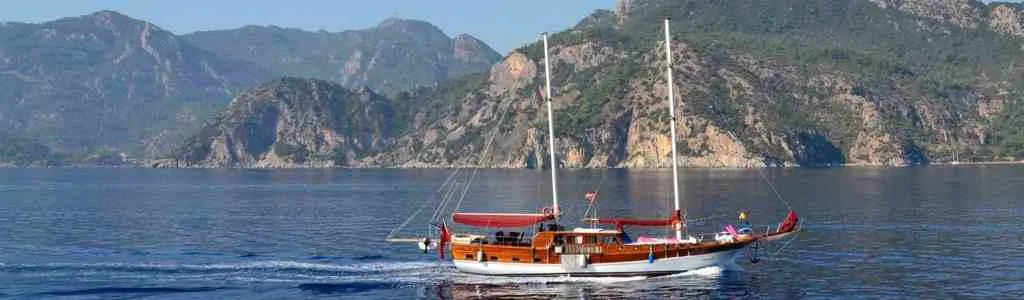
The Tyrrhenian coast of Basilicata is entirely made up of the vast territory of Maratea (area 6,732 hectares) which extends between Campania (territory of the municipality of Sapri) to the North and Calabria to the South (municipality of Tortora), with its 32 km of coastline, and is located within the Gulf of Policastro.
The entire coast, tower by tower- North Coast
The coast of Maratea is bounded by several signaling towers, all built at the end of the sixteenth century to protect against pirate raids; from North to South we find:
Crivi Tower, at the height of the Midnight Channel [see photo], - square plan, ruins;
Tower of Acquafredda, almost at the southernmost part of the settlement of Acquafredda, quadrangular in plan, ruins;
Praise the Donkey Tower, south of the settlement of Cersuta, on a cliff overlooking the sea, square in plan, ruins;
Torre Santavenere(see below), originally quadrangular in plan, was rebuilt in the 1950s and 1960s, and is the largest of all the coastal towers in Maratea; at the height of the Santavenere Tower, there is a buoy with a dayboard marked X, which marks the terminal of a submarine pipeline: from this point, the Historic Center of Maratea and the Statue of the Redeemer, which is 22 m high and located on Monte San Biagio (630 m), are very visible.
The statue is the most visible element in the area, stretching across the entire horizon even at night: in fact, during the summer months, the statue is illuminated.
The coast of Maratea is included among the "MARINE AREAS OF RECONNAISSANCE" eligible for the establishment of MARINE PARKS or MARINE RESERVES, pursuant to art. 36, para. f) of the state law no. 394 of December 6, 1991, known as the "FRAMEWORK LAW ON PROTECTED AREAS". The process for establishing the Protected Area of the coast of Maratea is currently underway
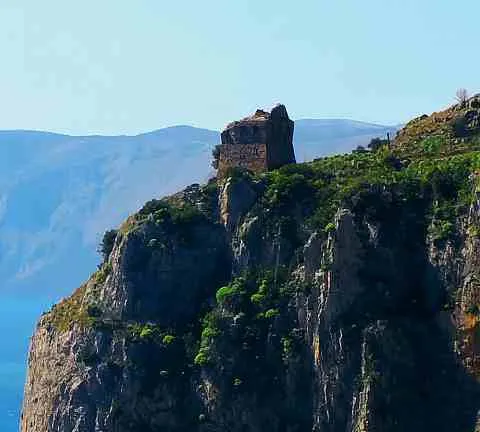
Tower of Santa Venere
The Tower of Santa Venere, completed in 1596, was a "Captain" or "Imperial" tower, meaning it was a strategic structure housing a small garrison of soldiers and served as a reference point for all the other coastal towers in the area. Unlike the standard litoral towers built with three or five embrasures, a panoramic terrace, and a gun slit facing the sea, this tower stood out with an original design conceived by the royal engineer Pietro Castiglione.
At the end of the 17th century, the famous traveler Giovan Battista Pacichelli described it as "the most beautiful tower in the Kingdom of Naples," praising its elegance and strategic importance.
In the middle of the 20th century, its original form suffered severe alterations. In the 1950s, architect Stefano Berardi transformed it to adapt it for private residential use, modifying its historical and architectural integrity. Nevertheless, the Tower of Santa Venere remains a valuable testimony of the coastal defensive system of the Kingdom of Naples.
South Coast
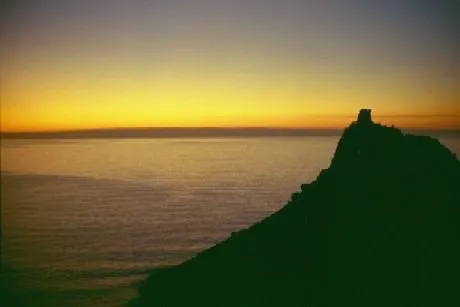
Tower of Filocaio, south of Port, also rebuilt, square plan; further south the S. Ianni islet appears detached from the coast and low above water, (max 8m).
The summit is marked by a cross while the islet is almost entirely covered with vegetation.
Coming from the North, in the passage between the island and the coast, one must be very careful of the rocks and the shallow waters under the coast, and especially of the Giumenta sandbank which is located exactly on the median route parallel to the coast.
The upper part of the sandbank has a depth of 1 m, but both towards the shore and out to sea, the passage is easy.
Further ahead we find Torre Caina [see photo], on a small promontory halfway between Marina di Maratea and Castrocucco, square in plan, ruins.
In Castrocucco there are instead the ruins of the ancient Castle on the mountain of the same name, probably of medieval origin with modifications and renovations datable around the '600 and now completely in ruins.
The coastal defense system of Maratea
The defensive system of the coastal towers of the Kingdom of Naples was part of a wide network organized to protect the territory from enemy raids, particularly from Barbary pirates, who in the 16th and 17th centuries represented a constant threat. The towers, distributed along the coast of the kingdom, were not isolated structures but part of an integrated system that included main fortresses, secondary outposts, and an efficient signaling network.
Structure of the defense system
The coastal towers served as observation, communication, and active defense points. Each tower was staffed with permanent personnel, ensuring continuous surveillance of the coast. Two sentinels patrolled each watch post, alternating shifts of 24 hours, thus maintaining a constant and vigilant presence. This system required a deployment of many men overall, a force distributed along the coast in proportion to the number of towers and outposts present in each location.
Distribution of towers
The number of towers varied significantly from one area to another, depending on the vulnerability of the territory and its strategic importance. Some lands or cities could count on only one tower, while others, such as Maratea, had many more. This density reflected the need to protect inhabited centers, commercial routes, and natural resources.
Economic Organization
The guards of the towers received a daily wage of one carlino for a pair of sentinels. It was a modest but stable compensation, ensuring a basic level of subsistence for the soldiers engaged in surveillance, who were often invalids and/or unfit for combat. This expense, supported by the royal treasury or local contributions, represented an investment in collective security.
Operation of the towers
Each tower was designed to serve multiple functions:
Signal: Thanks to a system of fires or smoke, towers could quickly communicate the presence of dangers to other towers and to the inhabitants of the inner cities.
Detection: From their elevated positions, the towers allowed for a clear view of the surrounding waters, ensuring a timely warning of hostile ships.
Active Defense: Some towers were equipped with armaments, such as cannons or bombards, to repel any possible attacks.
Strategic importance
This system demonstrated a high level of military and civilian planning, integrating defense, communication, and economic organization. Although the pay and living conditions of the sentinels were modest, their function was crucial for the security and stability of the Kingdom of Naples.
The coastal tower system represents today a testament to ingenuity and the ability to adapt to the challenges of the times, leaving a valuable architectural and historical legacy.
Treasure Hunt
A NEW WAY TO EXPLORE THE CITY
AN EXCITING TREASURE HUNT
that unites the entire family in fun
MARATEA: THE SARACEN’S LEGACY
A StreetAdventures™ necklace adventure