RESISTENCE OF MARATEA AND OTTAVIA
the French
After Joseph Bonaparte was proclaimed king of Naples on March 30, 1806, bands of legitimist troops offered a disorganized but courageous resistance to the Napoleonic advance in the Kingdom of Naples.
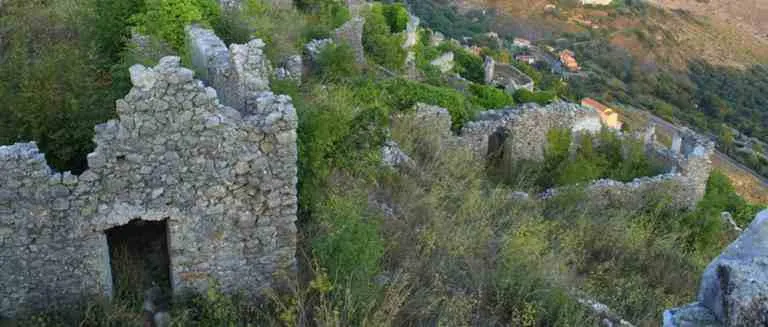
After the horrifying massacre of Lauria in August 1806, in December of the same year Maratea suffered an assault carried out by General Jean Maximilien Lamarque, who with 4,000 men and four cannons presented himself at the gates of the “Castle,” which was defended at that time by Colonel Maratean Alessandro Mandarini.
Alexander Mandarini
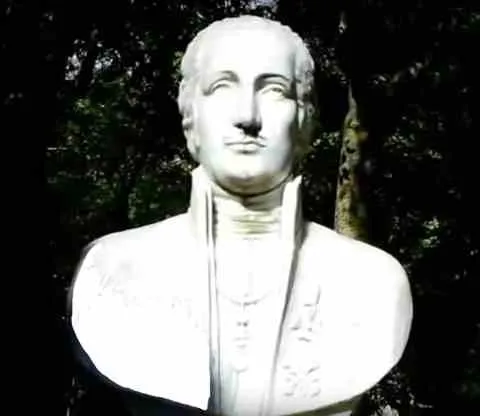
Bust of Colonel Alessandro Mandarini - Villa Comunale Maratea
The website www.maratea.info is updated by the volunteers of
- To stay updated on the activities of AltriTurismi ETS ->
THE ASSEDIUM AND THE BATTLE
The siege is vividly described by the Basilicata historian Giacomo Racioppi in his “Storia dei Popoli della Basilicata e della Lucania” (“History of the Peoples of Basilicata and Lucania”):
“On 4 December, having positioned the artillery on nearby heights and surrounded the stronghold on three sides, he set about cutting off all communication by land.
He demanded its surrender, which was refused, and the bombardment began. It grew fiercer and more effective when two larger-calibre cannons arrived from Lagonegro, together with Colonel Pignatelli-Cerchiara and five hundred soldiers from Sapri. These troops were to hold off the partisans assembled at Castrocucco under Major Giuseppe Necco, and others arriving from the villages around Sicignano, led by a certain Tommasini.
On the 7th, these scattered bands of partisans attempted to bring relief to the besieged by sea. Yet scarcely had one of their boats, carrying forty brave men, reached the shore when it was captured, and its occupants were killed or taken prisoner. Meanwhile, the besiegers’ artillery continued to batter the towers defending the castle gate. A surprise assault was attempted on the night of the 8th, while a mine was detonated using barrels of gunpowder brought for the purpose.
The surprise attack failed, leaving many dead and wounded at the foot of the walls.
Nevertheless, the advancing siege works and the sustained, heavy attacks discouraged the garrison, which consisted largely of hastily assembled men, poorly supplied with ammunition and provisions. They therefore listened to the general’s renewed and more reasonable proposals, for he was eager and needed to move on, and accepted an honourable surrender. Under its terms, once the castle had been handed over, the regular soldiers embarked for Sicily. The irregular fighters were taken to the church in Maratea, where, amid solemn religious rites and a sermon by the parish priest, they swore before an image of Christ never again to take up arms against the French. They were then set free.
This took place on 10 December.”
The Sicignano troops, under Tommasini's command, passed to the victor's service: Alessandro Mandarini did not want to, even though he was the object of special blandishments, and retired to Sicily, where he lived on honest commerce in Cefalù until the Bourbon restoration came to restore his fortunes.»
END OF MARATEA SUPERIOR
Although Mandarini secured the safety of the town and its inhabitants, he could do nothing to prevent the French from demanding the demolition of the walls and towers of Castello. Stripped of its defensive fortifications, the settlement known as Upper Maratea rapidly lost its population. By 1808, the old town had been reduced to a hamlet of the Borgo, which from then on became the sole administrative centre of the municipality.
During the same period, Maratea also acquired the uninhabited territory of Castrocucco, thanks to the laws against feudalism pushed forward by the French.
The hard blow suffered from the French siege did not greatly diminish the commercial fortunes of Maratea: until Unification, the city was an important maritime port as well as a producer of wine, oil, and wool.
THE RISORGIMENTO
In 1820 carbonari sales became widespread, including the one on August 17, which took place in the presence of the parish priest D’Alitto, during which the revolutionary marateots swore allegiance to the national constitution.
On July 4, 1848, the revolutionary Costabile Carducci was forced to make an emergency landing on the beach of Acquafredda's Porticello, blocked by a storm that prevented him from continuing his journey towards the Cilento. Discovered by pro-Bourbon assassins from the nearby town of Sapri, he was captured, tortured, and killed on the same day, along the path that leads up into the mountains behind the village.
Raffaele Ginnari, a companion of Carducci, in 1860 promoted the formation of a revolutionary committee for the unification of Italy in Maratea. The city itself provided four men for Giuseppe Garibaldi’s Southern Army, which crossed the maratean coast by boat on September 3.
Treasure Hunt
A NEW WAY TO EXPLORE THE CITY
AN EXCITING TREASURE HUNT
that unites the entire family in fun
MARATEA: THE SARACEN’S LEGACY
A StreetAdventures™ necklace adventure