THE STORY OF MARATEA | the name

Legends, or rather the stories passed down through traditions, have given us many explanations about the origins of the city of Maratea.
For one of these, the city's earliest steps likely date back to the times of the ancient Greeks, that is, in the 8th century BC: the origin would trace back to the foundation by Greeks in search of new colonies of a small settlement on the slopes of the mountain overlooking Maratea to the south, today called San Biagio.
For others, Maratea is instead what remains of the famous city of Blanda, which held great importance for the Christian world—having its own bishopric—and of which traces were lost in the 8th century AD.
The most plausible hypothesis, in our opinion, supported by the thought of various scholars and historians, is a mix of the two most important hypotheses and that the inhabitants of Blanda joined with the first inhabitants of Maratea, in the place described above, that is, Monte San Biagio; all of this, probably, at the end of the history of the city of Blanda.
ORIGIN OF THE NAME
As for the name, in this case there is no unanimous opinion either.
For some historians, the name would derive from "Thea - maris", that is, "Goddess of the Sea";
for others instead it is "Mar-an-thà", which means “God has come”;
others from "Marathus" which means land of the onions.
This last thesis seems to be the most plausible, supported also by the extensive presence, even today, of wild fennel on the territory.
The website www.maratea.info is updated by the volunteers of ALTRITURISMI.it
MAKE A DONATION
- To stay updated on the activities of AltriTurismi ETS -> Subscribe to the newsletter
TOWERS AND CASTLES
For centuries, Maratea has never actively participated in revolutions, yet it has been subject to various dominations that succeeded one another over the years, such as those of the Normans, the Angevins, and the Spaniards. Despite this, Maratea has always maintained, due to the strategic value of its geographical position, a privileged status throughout those centuries.
The same geographical position facilitated Maratea's defense from the numerous raids of Arab pirates who terrorized the Italian coasts for several centuries.
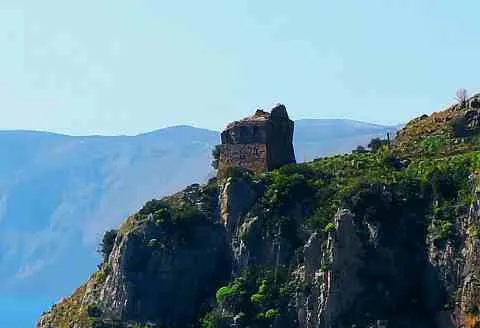
Between the sea and the mountains, protected by a system of seven towers, some of which have been rebuilt and are now inhabited, and by a formidable castle, which is now in ruins after being put to the sword and fire by Gen. Lamarque with about 6000 men in September 1806, following Napoleon Bonaparte's order, despite the fierce defense by a very valiant officer, Alessandro Mandarini, leading a small contingent.
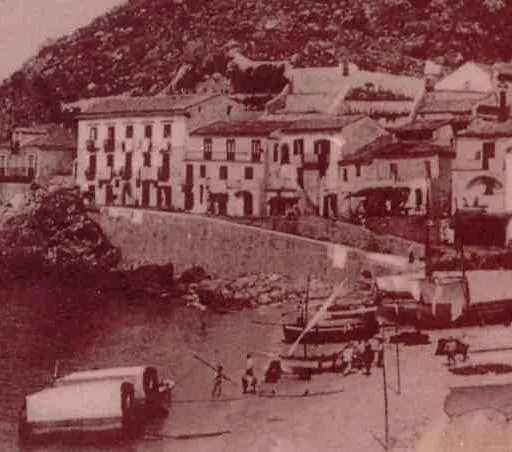
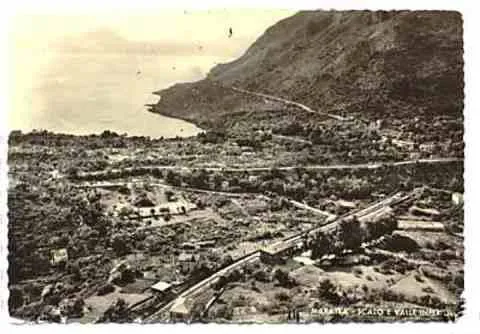
From that moment, the original settlement on Mount San Biagio began to move down towards the valley and the sea, giving rise to a whole series of activities such as fishing and the processing of silk, cotton, flax, and leather, while maintaining a decent production of wine, citrus fruits, oil, and vegetables, and naturally, cheese, for which Maratea has always been justly renowned.
In the eighteenth century, Maratea was famous for the high cultural level of its citizens due to a low rate of illiteracy, a characteristic that continued to distinguish it even after Italian unification.
Treasure Hunt
A NEW WAY TO EXPLORE THE CITY
AN EXCITING TREASURE HUNT
that unites the entire family in fun
MARATEA: THE SARACEN’S LEGACY
A StreetAdventures™ necklace adventure